The H-1B lottery is the gateway to America's most sought-after work visa — and with over 400,000 registrations competing for just 85,000 spots each year, understanding how the H-1B visa lottery actually works can make the difference between selection and waiting another year. This complete guide explains the H-1B lottery process step by step: how registration works, when H-1B lottery results are announced, what your real odds of selection are, and the strategies that genuinely improve your chances — all grounded in official USCIS data and our analysis of 1.5M+ real Department of Labor filing records.
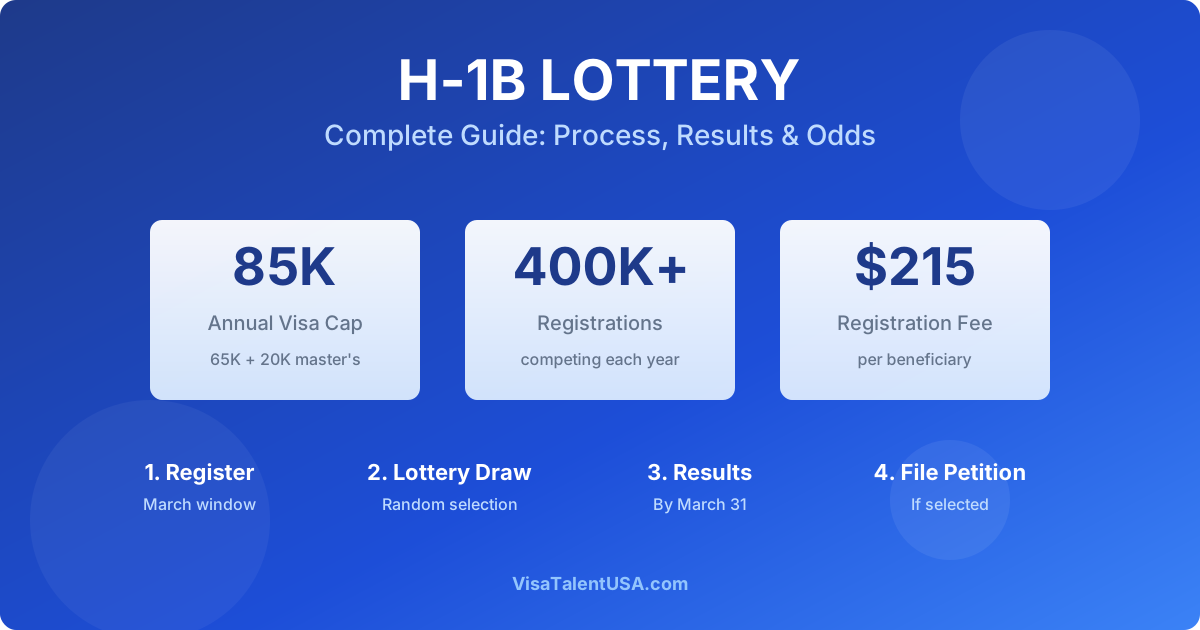
H-1B Lottery: Key Facts
- Annual cap: 85,000 visas (65,000 regular + 20,000 U.S. master's exemption)
- Selection method: Random lottery from electronic registrations
- Registration fee: $215 per beneficiary (paid by employer)
- Registration window: Typically March each year
- Results announced: By March 31 (selection notifications)
- FY2026 registrations: ~400,000+ for 85,000 spots
What Is the H-1B Lottery?
The H-1B lottery is the random selection process U.S. Citizenship and Immigration Services (USCIS) uses to choose which H-1B visa petitions it will accept each fiscal year. Because demand for H-1B visas massively exceeds the annual congressional cap of 85,000, USCIS cannot process every petition — so it holds a lottery.
Since the FY2021 cap season, the H-1B lottery for the visa program has used an electronic registration system. Instead of filing a full petition upfront, employers first submit a simple online registration for each worker they want to sponsor. USCIS then randomly selects registrations up to the cap. Only selected employers go on to file the full H-1B petition (Form I-129).
This two-step system — register first, petition only if selected — saves employers and workers enormous time and money compared to the old paper-based lottery, where hundreds of thousands of complete petitions were filed and most were returned unprocessed.
How the H-1B Visa Lottery Works: Step by Step
Here is exactly how the lottery for H-1B visas runs each year, from registration to results:
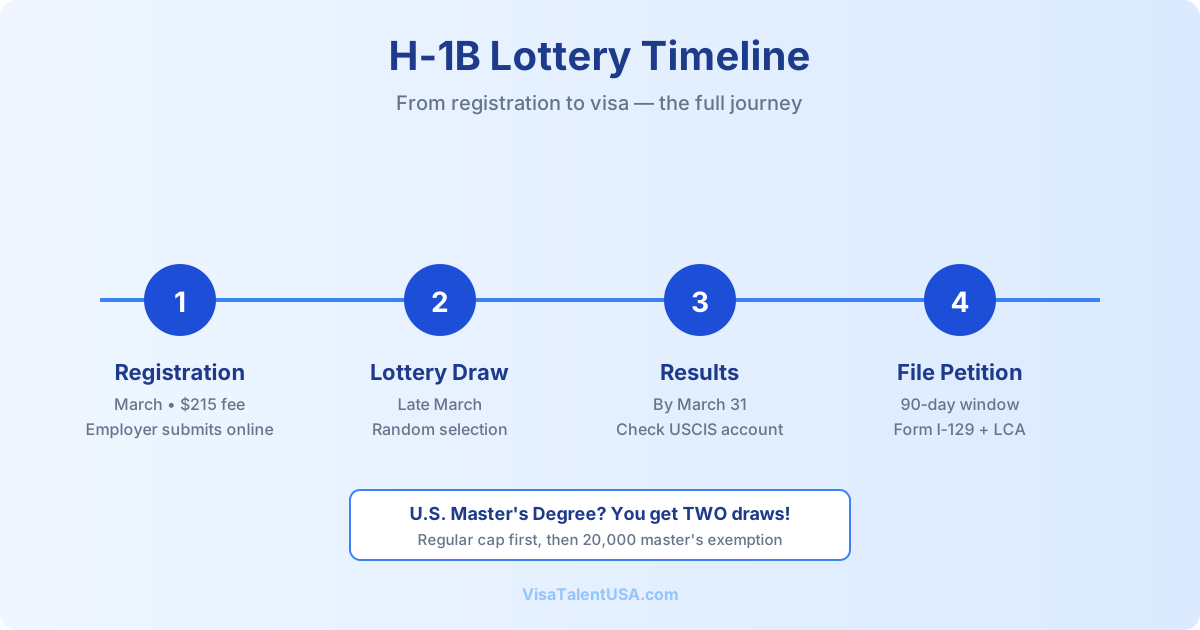
Step 1: Employer Registration (March)
During a registration window of at least 14 days (typically in March), U.S. employers log into the USCIS online system and submit an electronic registration for each foreign worker they intend to sponsor. Each registration requires basic information about the employer and the beneficiary, plus the $215 registration fee per person.
One critical rule: each beneficiary may only have one registration per employer, but multiple legitimate employers may each register the same person. USCIS uses a beneficiary-centric selection system to prevent gaming — duplicate registrations by related entities for the same worker can disqualify all of them.
Step 2: Random Selection
After registration closes, USCIS runs computerized random selections. The lottery happens in two rounds:
- Regular cap selection: USCIS first selects from the entire pool (including U.S. master's degree holders) to fill the 65,000 regular cap.
- Master's cap selection: Unselected U.S. master's (or higher) degree holders then get a second chance in the 20,000 master's exemption lottery.
This two-draw structure is why a U.S. master's degree is such an advantage — it effectively gives you two lottery tickets instead of one.
Step 3: Selection Notifications
USCIS notifies selected registrants through their online accounts — usually by March 31. If you are selected, your employer has at least 90 days to file the full H-1B petition. Being selected in the H-1B lottery does not guarantee visa approval; it only means USCIS will accept your petition for processing.
Step 4: Petition Filing
The employer files Form I-129 with USCIS, along with a certified Labor Condition Application (LCA) from the Department of Labor, proof of the job offer, the worker's qualifications, and filing fees. USCIS then adjudicates the petition on its merits.
H-1B Lottery Results: When and How to Check
H-1B lottery results are released through the USCIS online registration system — there is no public list of selected names. Your employer (or their attorney) checks the USCIS account where the registration was submitted. Each registration shows one of these statuses:
- Selected: Your registration was picked. Your employer may file the H-1B petition.
- Submitted: Not selected in the initial round, but still eligible if USCIS runs a second selection.
- Denied: Duplicate registration or ineligible — cannot be selected.
- Invalidated-Failed Payment: Registration fee payment failed.
For the most recent cycles, H-1B visa lottery results have been announced by March 31. In years when the initial selection does not fill the cap, USCIS conducts additional selection rounds in summer — so a "Submitted" status in April can still turn into a selection later.
H-1B Lottery Odds: What Are Your Real Chances?
Your H-1B lottery odds depend on one simple ratio: 85,000 available visas divided by the number of eligible registrations. In recent years, that math has been sobering:
| Fiscal Year | Eligible Registrations | Selections | Overall Selection Rate |
|---|---|---|---|
| FY2024 | ~759,000 | ~110,000 | ~14.5% |
| FY2025 | ~479,000 | ~135,000 | ~28.2% |
| FY2026 | ~344,000 | ~121,000 | ~35.3% |
Source: USCIS cap-season statistics. FY2025's drop in registrations followed USCIS's beneficiary-centric anti-fraud rule, which eliminated most duplicate filings.
Note these are overall rates. Your personal odds are better if you hold a U.S. master's degree (two draws instead of one) and vary by wage level under the current selection system. Our H-1B lottery odds calculator lets you estimate your chances by wage level and degree.
Who Can Enter the H-1B Lottery?
To be registered for the H-1B lottery, the worker must:
- Have a U.S. employer willing to sponsor them (no self-petitioning)
- Hold at least a bachelor's degree (or equivalent) in a specific specialty
- Be offered a "specialty occupation" role requiring that degree
- Be paid at least the prevailing wage for the role and location
There is no lottery entry for cap-exempt employers — universities, nonprofit research organizations, and government research institutions can sponsor H-1B workers year-round without going through the lottery at all.
H-1B Lottery Fees (2026)
| Fee | Amount | When Due |
|---|---|---|
| Registration fee | $215 per beneficiary | At registration (March) |
| Petition filing (I-129) | $460–$780 | Only if selected |
| ACWIA training fee | $750–$1,500 | Only if selected |
| Fraud prevention fee | $500 | Only if selected |
By law, the employer must pay the H-1B fees — passing these costs to the worker is prohibited. The $215 registration fee is the only cost at the lottery stage, which is why the electronic system is so much cheaper than the old file-everything approach.
Strategies to Improve Your H-1B Lottery Chances
You cannot rig a random draw — but several legitimate strategies genuinely improve your odds:
- Earn a U.S. master's degree. The single biggest lever: two selection rounds instead of one.
- Target cap-exempt employers. Universities and research nonprofits skip the lottery entirely.
- Negotiate a higher wage level. Under wage-weighted selection, higher prevailing-wage levels receive more entries per registration.
- Multiple legitimate employers. Each genuine job offer from a separate employer is a separate registration — but they must be real, bona fide offers.
- Choose sponsors with strong filing records. Our sponsor database shows which of the top 1,000 H-1B employers have the highest DOL LCA certification rates — a selected registration still needs an approvable petition behind it.
Common H-1B Lottery Myths
- "Big companies always win." Selection is random per registration. What big companies have is more registrations — not better luck per ticket.
- "Selection means visa approval." No — it means USCIS will accept your petition. The petition must still be approved on its merits.
- "You can only try once." Unselected workers can be registered again every year. Many succeed on their second or third attempt.
- "Day-one CPT protects you." Risky and heavily scrutinized — not a lottery strategy.
Methodology: How We Analyze H-1B Data
VisaTalentUSA's lottery analysis is built on the U.S. Department of Labor's official Labor Condition Application (LCA) disclosure data — 1,532,089 H-1B records across FY2024–FY2026 — normalized through an open-source pipeline. We track the top 1,000 H-1B employers by filing volume, their DOL LCA certification rates, prevailing wage levels, and worksite geography. Selection-rate figures cited above come from USCIS's published cap-season reports.
Learn about our methodology and explore all 1,000 top H-1B sponsors.
Sources
- U.S. Citizenship and Immigration Services — H-1B Electronic Registration Process
- U.S. Citizenship and Immigration Services — FY2026 H-1B Cap Season Statistics
- U.S. Department of Labor — LCA Disclosure Data (FY2024–FY2026)
- Federal Register — H-1B Registration Requirement